

WDTA Blog
Industry news and insights
Workplace drug testing news in Australia, plus practical drug and alcohol testing insights for employers, providers and policymakers.
Featured post
Featured
NSW medicinal cannabis driving reforms pass: what employers need to know
NSW has passed laws that stop registered medicinal cannabis patients losing their licence just because THC is detected. Road rules have changed, but workplace safety duties have not.
Read moreAll posts
Drug and alcohol testing insights
NSW medicinal cannabis driving reforms pass: what employers need to know
NSW has passed laws that stop registered medicinal cannabis patients losing their licence just because THC is detected. Road rules have changed, but workplace safety duties have not.
Read more about NSW medicinal cannabis driving reforms pass: what employers need to knowSafe Work Month 2026: building a drug and alcohol testing program that is fair and defensible
This October’s theme is “Safe work is for life”. Recent Fair Work decisions show why a testing program needs clear procedures, the right standards and a focus on impairment.
Read more about Safe Work Month 2026: building a drug and alcohol testing program that is fair and defensibleMedicinal cannabis regulation is tightening: what the TGA’s 2026–27 plan means for workplaces
Approvals for medicinal cannabis continue to climb, and the TGA has committed to examine reform of unapproved products. Here is what that means for workplace policies.
Read more about Medicinal cannabis regulation is tightening: what the TGA’s 2026–27 plan means for workplacesAustralia’s deadliest overdose year on record: what employers should know
Penington Institute’s latest report recorded 2,596 drug-induced deaths in 2024, the highest on record. Many were people of working age.
Read more about Australia’s deadliest overdose year on record: what employers should knowStimulants lead workplace positives in 2026: what the latest testing data shows
New quarterly data from a national testing provider shows amphetamine-type stimulants in six out of ten positive workplace tests, with cocaine also rising.
Read more about Stimulants lead workplace positives in 2026: what the latest testing data showsWastewater Report 25: record methylamphetamine and cocaine use, and what it means for employers
Australians consumed an estimated 26.8 tonnes of methylamphetamine, cocaine, MDMA and heroin in a year, the highest since monitoring began.
Read more about Wastewater Report 25: record methylamphetamine and cocaine use, and what it means for employers
Executive Market – a potential new market for workplace drug and alcohol testing
The WDTA supports expanding workplace drug and alcohol testing to executives, promoting accountability, safety, and responsibility across all professional sectors.
Read more about Executive Market – a potential new market for workplace drug and alcohol testing
Medicinal cannabis – A guide for employers & employees
Key insights from a webinar on medicinal cannabis in the workplace: the importance of clear drug policies, medication privacy, and addressing safety risks, with a focus on testing methods and employer responsibilities
Read more about Medicinal cannabis – A guide for employers & employees
James Brown , Alcolizer Technology shares his views on Alcohol testing, Blood vs Breath
Breath alcohol testing (BrAC, g/210L) is now the industry standard — read about breath vs blood measurements and the implications for AOD policies.
Read more about James Brown , Alcolizer Technology shares his views on Alcohol testing, Blood vs Breath
The growth of prescribing Medicinal Cannabis in Australia and New Zealand
As cannabis use grows in Australia and New Zealand, doctors must discuss its health risks, interactions, and workplace implications with patients using or considering medicinal THC.
Read more about The growth of prescribing Medicinal Cannabis in Australia and New Zealand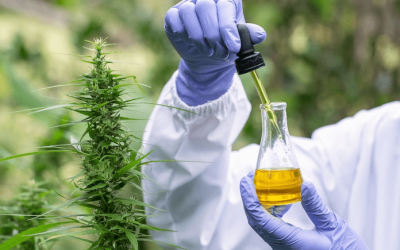
Third Party Testing for Peace of Mind
As medicinal and recreational cannabis use rises in Australia and New Zealand, healthcare professionals need to engage in informed discussions with patients about its health implications.
Read more about Third Party Testing for Peace of Mind
Managing Medicinal Cannabis in the Workplace
International use of prescribed medicinal cannabis is rising. Workplaces must balance legal compliance with safety, considering THC’s effects and testing, while managing disclosure, risk assessment, and appropriate policy frameworks.
Read more about Managing Medicinal Cannabis in the Workplace
Workforce Drug Test Positivity Reaches Highest Rate
Positive drug test results for cocaine and marijuana are rising among federally mandated, safety-sensitive workers, highlighting growing workplace safety concerns.
Read more about Workforce Drug Test Positivity Reaches Highest Rate
Workplace Safety And Your Company’s Reputation
The 2022 Quest Diagnostics Drug Testing Index shows rising drug use in the US workforce, highlighting why comprehensive workplace drug testing is essential for safety and productivity.
Read more about Workplace Safety And Your Company’s Reputation
Wastewater Testing Detection
Wastewater analysis reveals the types and amounts of drugs Australians consume, highlighting regional methamphetamine use and its implications for workplace safety.
Read more about Wastewater Testing Detection
Welfare Recipient Drug Testing from the Perspective of Workplace Testing
Australia’s workplace drug testing programs, used by millions of employees, offer a robust, accurate, and legally defensible model for random testing schemes.
Read more about Welfare Recipient Drug Testing from the Perspective of Workplace TestingNo posts match your search. Try another word or choose a different category.
Subscribe to our newsletter
Get WDTA news and updates in your inbox.
By subscribing, you agree to receive emails from WDTA. Unsubscribe anytime. Privacy Policy
Members get moreWDTA members get access to an exclusive library of resources.
Looking for guides and tools?
Get in touch
Have a story to share?
If you have industry news, research or an idea for a post, we'd like to hear from you.
General enquiries

NSW medicinal cannabis driving reforms pass: what employers need to know
On 18 September 2026 the NSW Government announced that its medicinal cannabis driving reforms had passed Parliament. The changes affect how roadside drug testing works for some patients. They do not change what employers must do to manage safety at work.
What the new law does
The Road Transport Amendment (Medical Cannabis and Driving Offences) Bill 2026 changes how the drug presence offence applies to people who use prescribed medicinal cannabis. Until now, any detection of THC could lead to an immediate three-month licence loss, whether or not the driver was impaired.
Under the new system, drivers who register with Transport for NSW, provide evidence of a valid prescription and complete an online education module will not be automatically penalised just because THC is found. A laboratory result below 50 ng/ml means no further action. A result at or above 50 ng/ml brings a warning for a first or second detection within two years. A third detection within two years attracts a $722 fine and a minimum three-month suspension.
What stays the same
Roadside testing itself has not changed. A positive roadside saliva test still means an immediate 24-hour driving ban while the sample goes to a laboratory. Driving while impaired is still a serious offence for everyone, including registered patients.
The scheme is limited to drivers on an unrestricted NSW licence. It does not apply to learner drivers, P-plate drivers or commercial drivers. Registered patients must have no alcohol or other drugs in their system, and blood and urine testing still applies after serious crashes. The government says the registry and education module are expected to launch between late 2026 and early 2027, and the system will be reviewed after one year.
Why it matters at work
The reform shows a clear shift towards separating the presence of a drug from impairment. Independent MP Alex Greenwich first raised the issue with a private member’s bill in November 2025, which he withdrew in May 2026 once the government committed to its own legislation. The ABC reported in June 2026 that Transport for NSW data showed 8 per cent of fatal crashes between 2019 and 2023 involved a driver or rider with only THC detected, although that data did not show who was at fault.
For employers, the most important point is that road law and workplace law are different. A registered patient who is protected from an automatic road penalty can still be unfit for safety-critical work. Workplace drug and alcohol policies are set under work health and safety duties, not the road rules, and commercial drivers are outside the new scheme altogether.
Practical steps for employers
Now is a good time to check that your drug and alcohol policy deals clearly with medications, including medicinal cannabis. Workers should know how to disclose a prescription confidentially, who they tell, and how fitness for work will be assessed.
Review which roles involve driving, and whether those workers hold unrestricted, provisional or commercial licences. Make sure supervisors understand that a worker who mentions the new NSW registry has not been cleared for safety-critical work. Where your workforce crosses state borders, remember that each state has its own drug driving rules.
Finally, keep the focus on impairment and risk. A clear process for assessing fitness for duty, supported by testing to the relevant Australian Standards, is fairer to workers and easier to defend.
Key takeaways
- NSW has passed laws so registered medicinal cannabis patients are not automatically penalised for THC alone when driving.
- Roadside testing, the 24-hour ban and impaired driving offences remain in place.
- Learner, P-plate and commercial drivers are excluded from the scheme.
- Workplace WHS duties are unchanged, so policies should still focus on fitness for work.
WDTA members get practical guidance on managing medications in the workplace. Find out more about WDTA membership or browse the Resource Library.
Sources
- Minns Labor Government’s medicinal cannabis driving reforms pass NSW Parliament, NSW Government, 18 September 2026
- Cannabis driving limit change to give "freedom" to medicinal users in NSW, ABC News, 4 June 2026
This article is general information only. It is not legal, medical or professional advice.

Safe Work Month 2026: building a drug and alcohol testing program that is fair and defensible
October is National Safe Work Month, and Safe Work Australia’s 2026 theme is “Safe work is for life”. It is a good moment for employers to check that their drug and alcohol program protects people and stands up to scrutiny.
Why the theme matters
When it announced the theme in May 2026, Safe Work Australia said work health and safety is about protecting long-term wellbeing as well as preventing immediate harm. It reported that 188 workers died from traumatic injuries in 2024 and that there were 146,700 serious workers’ compensation claims in 2023–24, more than 400 a day.
Alcohol and other drugs are one of many risks employers manage under their WHS duties. A well-run testing program is one tool, alongside education, supervision and support.
Start with a clear, consulted policy
A testing program works best when workers understand it. That means a written policy that explains when testing happens (for example pre-employment, random, post-incident or for cause), what substances are tested for, what happens after a not-negative result and how medications are handled.
Consultation is a WHS requirement and also builds trust. Involve workers and their representatives early, and review the policy regularly.
Follow the Australian Standards, and your own procedure
In Australia, urine testing is covered by AS/NZS 4308:2023 and oral fluid testing by AS/NZS 4760:2019. These standards set out how samples are collected, the cut-off levels for screening and confirmation, and how results are reported. On-site screens give a preliminary result. A not-negative screen should be confirmed by an accredited laboratory before it is treated as positive.
Following your own written procedure is just as important. In Brew v Downer EDI Works [2026] FWC 955, decided in March 2026, the Fair Work Commission ordered the reinstatement of a supervisor with 27 years’ service. Among other findings, the Commission found the employer had not followed its testing procedure: the worker was not offered a second on-site test and the test kit had been pre-opened. His laboratory result of 41 µg/L of THC metabolite was above the 15 µg/L confirmation cut-off but below the 55 µg/L on-site screening cut-off.
Presence is not the same as impairment
A confirmed result shows that a drug or its metabolite was present. It does not, on its own, prove a worker was impaired at the time. In the Downer case, expert witnesses on both sides agreed the test detected metabolites, not impairment, and the Commission found the worker was not impaired at work.
The Commission also noted that “zero tolerance however does not mean that dismissal must follow every breach of the drug and alcohol policy.” Employers should consider the full circumstances, including length of service, the worker’s explanation and the options the policy allows, such as warnings, counselling or support.
Process matters too. In Dale-McCormick v Sleepeezee Bedding Australia [2026] FWC 347, decided in February 2026, a truck driver was dismissed after a positive roadside saliva screen with no laboratory confirmation. The Commission found the dismissal harsh, partly because the decision had been made before the worker was given a chance to respond.
A simple checklist
Use providers and laboratories that test to the relevant Australian Standard. Train the people who collect samples. Keep chain-of-custody records. Give workers a fair chance to respond before any decision. Offer support through an employee assistance program. Treat every result with confidentiality.
Key takeaways
- Safe Work Month 2026 focuses on protecting long-term wellbeing, not just preventing immediate harm.
- Test to AS/NZS 4308:2023 (urine) or AS/NZS 4760:2019 (oral fluid) and confirm not-negative screens in a laboratory.
- Follow your own written procedure. Recent Fair Work decisions turned on procedural failures.
- A positive result shows presence, not impairment. Consider proportionate responses.
WDTA supports employers and providers to run testing that is accurate and fair. Explore WDTA membership or visit the Resource Library.
Sources
- 2026 National Safe Work Month theme announced, Safety Solutions, 11 May 2026
- 2026 National Safe Work Month campaign kit now available, Safe Work Australia, September 2026
- Brew v Downer EDI Works Pty Ltd [2026] FWC 955 (background), Fair Work Commission, 23 March 2026
- FWC reinstates 27-year Downer employee fired for positive drug test (background), HRD Australia, 28 March 2026
- Dale-McCormick v Sleepeezee Bedding Australia [2026] FWC 347 (background), Fair Work Commission, February 2026
This article is general information only. It is not legal, medical or professional advice.

Medicinal cannabis regulation is tightening: what the TGA’s 2026–27 plan means for workplaces
Medicinal cannabis prescribing in Australia keeps growing, and regulators are responding. In September 2026 the Therapeutic Goods Administration (TGA) published its 2026–27 Business Plan, which commits it to examine options to reform how unapproved medicinal cannabis products are regulated.
What the TGA has committed to
The business plan says the TGA will “examine options to reform the regulation of unapproved medicinal cannabis products”, with a focus on patient safety, sponsor responsibility and regulation that is proportionate to risk. It also commits to advancing frameworks for goods that are not on the Australian Register of Therapeutic Goods (ARTG), naming closed-loop supply chains, compounding and point-of-care manufacturing.
This follows the TGA’s review of the unapproved medicinal cannabis framework. That consultation drew 786 submissions, and the TGA noted that only two medicinal cannabis products are included on the ARTG. In its response, published in February 2026, the TGA said it would prioritise awareness and education for practitioners and consumers. No specific rule changes have been announced yet.
Prescribing continues to rise
An analysis of the TGA’s Special Access Scheme data published in September 2026 found at least 148,388 SAS Category B decisions disclosed between January and August 2026. The same analysis reported at least 207,980 for 2025 and 177,762 for 2024, and found that THC-dominant Category 5 products made up about half of disclosed applications.
Whatever happens with reform, a large number of Australians hold a prescription for medicinal cannabis. Many of them are of working age.
Other changes in 2026
The Department of Veterans’ Affairs updated its framework for funding medicinal cannabis. The changes applied to new clients from 16 February 2026, and existing clients had until 31 August 2026 to move to the new limits. DVA now limits veterans to three approved products at a time, funds dried herb only up to 25% THC and 2 g a day, excludes edibles such as gummies, and requires specialist prescribers and in-person consultations at key points.
The Australian Government has also consulted on remaking the Narcotic Drugs Regulation 2016, which is due to sunset on 1 April 2027 unless it is remade.
Why unapproved status matters
Most medicinal cannabis in Australia is prescribed as an unapproved product through the Special Access Scheme or the Authorised Prescriber Scheme. Unlike approved medicines, these products have not been assessed by the TGA for safety, quality and effectiveness for a particular use. Stakeholders in the TGA review said many patients are not aware of this, and suggested clearer warnings and labelling.
For workplaces, this means information about dose, strength and likely effects on alertness can be less consistent than for approved medicines. It is another reason to involve the worker’s treating doctor when assessing fitness for safety-critical work.
What it means for workplace policies
For employers, the trend is clear. More workers are likely to be using a prescribed medicine that can affect alertness and reaction time, and most of these products are still unapproved. A worker holding a valid prescription does not change an employer’s duty to manage risk in safety-critical roles.
Good practice includes a policy that explains how to disclose medications confidentially, a fitness-for-work assessment that can involve the worker’s treating doctor, and clear rules about safety-critical tasks. Testing to the Australian Standards will detect THC whether it came from a prescription or not, so a fair disclosure process is essential.
Employers should also watch for the outcome of the TGA’s reform work. Changes to products, labelling or prescribing rules could affect how workers and doctors talk about fitness for work.
Key takeaways
- The TGA’s 2026–27 Business Plan commits it to examine reform of unapproved medicinal cannabis.
- At least 148,388 SAS-B decisions were disclosed from January to August 2026, with THC-dominant products about half.
- DVA’s new limits on product numbers, dose and formulation took full effect from 31 August 2026.
- A prescription does not remove the need to manage impairment risk in safety-critical work.
For more on managing medicinal cannabis at work, read our guide for employers and employees or explore WDTA membership.
Sources
- Therapeutic Goods Administration Business Plan 2026–27, Therapeutic Goods Administration, September 2026
- Australia’s Medical Cannabis Reforms to Target “Closed Loop” Prescribing, Business of Cannabis, 4 September 2026
- Updated medicinal cannabis framework supports safe and effective prescribing practices, Department of Veterans’ Affairs, 2026
- Medicinal cannabis consultation: practitioner obligations and patient understanding, Therapeutic Goods Administration, May 2026
- The TGA’s medicinal cannabis products review: what stakeholders said and what comes next (background), King & Wood Mallesons, 19 March 2026
This article is general information only. It is not legal, medical or professional advice.

Australia’s deadliest overdose year on record: what employers should know
Penington Institute released Australia’s Annual Overdose Report 2026 on 28 August, ahead of International Overdose Awareness Day, following an early snapshot in June. It found that 2,596 Australians died a drug-induced death in 2024, the highest number on record.
The key numbers
The 2024 total was 10.7% higher than the 2,345 deaths recorded in 2023. That is about seven Australians every day, and almost twice the number of people killed on Australian roads in the same year (1,307).
For the first time, unintentional drug-induced deaths passed 2,000. The June snapshot put the figure at 2,091, up 15.1%. Victoria, Queensland, Western Australia and South Australia each recorded their highest number of unintentional drug-induced deaths since the series began.
Which drugs were involved
Opioids were involved in 1,083 drug-induced deaths, stimulants in 843 and benzodiazepines in 696. Many deaths involve more than one drug. The report recorded the highest number of unintentional deaths involving heroin, cocaine and amphetamine-type stimulants since records began.
The snapshot reported that stimulant-related deaths rose 25.1% and cocaine-related deaths rose 28.2%. The report also raised concern about rising cocaine-related deaths among young people, and about surging non-fatal overdoses and hospitalisations involving GHB and ketamine.
Why this matters for workplaces
The report notes that drug-induced deaths are among the leading causes of death for Australians in their 20s, 30s and 40s, and the snapshot found that people aged 50 to 59 recorded the most unintentional overdose deaths for the first time. These are the years when most people are working. Behind each number is a family, a team and often a workplace.
The drugs driving these deaths are the same ones showing up in workplace testing and in wastewater. Stimulant use is at record levels, and the report’s concern about cocaine, GHB and ketamine matches what other data sources are showing.
Reading the data carefully
Overdose deaths are only one measure of drug harm, and the figures in this report relate to 2024. Coronial processes mean final data is published well after the year it covers. Even so, the long-term trend in the report is upward, and the rise in stimulant and cocaine-related deaths is consistent with the record consumption shown in national wastewater monitoring.
For employers, the lesson is not that any particular workplace is at higher risk. It is that alcohol and other drugs affect people across every industry and age group, including experienced, long-serving workers.
What employers can do
A drug and alcohol policy should be about safety and support, not only discipline. Make sure workers know how to access your employee assistance program and other support confidentially, and that asking for help early will be treated fairly.
Supervisors and first aid officers benefit from training to recognise signs that someone may be affected by alcohol or other drugs, and to respond safely. Some organisations are also talking with their first aid providers about overdose response. These decisions should be made with professional advice and suit your workplace.
Testing has a role in identifying risk in safety-critical work. It works best as part of a broader program that includes education, clear policy and pathways to treatment. Reviewing your program each year against the latest national data helps keep it relevant to the risks your workers actually face.
Key takeaways
- 2,596 drug-induced deaths were recorded in 2024, up 10.7% on 2023 and the highest on record.
- Opioids, stimulants and benzodiazepines were the drug groups most often involved.
- Drug-induced deaths are a leading cause of death for Australians in their 20s, 30s and 40s.
- Workplace programs should combine testing with education, support and confidential help.
WDTA helps employers and providers build programs that put safety and support first. Learn about WDTA membership or browse the Resource Library.
Sources
- Penington Institute presents: Australia’s Annual Overdose Report 2026, Penington Institute, 28 August 2026
- Penington’s Annual Overdose snapshot shows 7 people a day are dying from overdose, Penington Institute, 16 June 2026
- Australia’s Annual Overdose Report (report page), Penington Institute, updated August 2026
This article is general information only. It is not legal, medical or professional advice.

Stimulants lead workplace positives in 2026: what the latest testing data shows
Workplace testing data released in 2026 gives a snapshot of what employers are finding on site. The Drug Detection Agency (TDDA) publishes a quarterly Imperans report on its Australian testing, and its latest figures show stimulants dominating positive results.
What the second quarter showed
TDDA’s Q2 2026 report, published in July and covering April to June 2026, found that 3.0% of its screens detected drugs. The provider described this as a broadly stable detection rate over the past four quarters.
Among positive results, amphetamine-type substances (ATS), which include methamphetamine, appeared in 59.98% of cases, up 17.9% on the same time last year. Cannabis appeared in 39.29% of positive results, down 2.0%. Opioids, including oxycodone, appeared in 11.58%, down 36.0%. Cocaine appeared in 8.04%, up 18.0% year on year. Because some samples contain more than one drug, these shares add up to more than 100%.
Differences between states
TDDA’s state-by-state ATS figures varied widely: 88.6% in Western Australia, 78.7% in South Australia, 53.0% in Queensland, 50.0% in Victoria and 47.5% in New South Wales. Its cocaine figures were highest in South Australia (14.9%) and New South Wales (12.0%), and its cannabis figure was highest in Queensland (46.3%).
The first quarter showed a similar pattern. Reporting on TDDA’s Q1 2026 data in April, HRD Australia noted that ATS were found in 53.3% of positive tests nationally.
How this fits the bigger picture
These results come from one provider’s testing and are not a national sample, but they line up with other sources. The latest National Wastewater Drug Monitoring Program report, released in April 2026, found record methylamphetamine and cocaine consumption across Australia.
The data also suggests that cannabis, while still common, is no longer the main driver of positive workplace results for this provider. Stimulants are.
Reading provider data with care
Quarterly figures from a single provider are useful for spotting trends, but they have limits. They reflect the industries, regions and test types that provider services, and the mix of pre-employment, random, post-incident and for-cause tests. A change in client mix can move the numbers as much as a change in drug use.
The most reliable picture comes from combining several sources: your own program results, national wastewater monitoring, household surveys and reports from health agencies. When these point the same way, as they do for stimulants in 2026, employers can act with more confidence.
What employers should take from it
Stimulants such as methamphetamine and cocaine can affect judgement, risk-taking and fatigue, particularly as the effects wear off. Make sure your testing panel covers the substances relevant to your workforce, in line with AS/NZS 4308:2023 for urine or AS/NZS 4760:2019 for oral fluid.
State differences matter for national businesses. A program designed around one state’s pattern of use may miss risks elsewhere. Use your own testing results, alongside public data, to target education and support where they are needed.
Finally, remember that a falling share of opioid or cannabis positives does not mean those risks have gone. Prescribed opioids and medicinal cannabis remain common, and a clear process for declaring medications is still essential. Regular reporting from your testing provider, broken down by site and test type, will help you see whether national trends are showing up in your own workforce.
Key takeaways
- TDDA’s Q2 2026 data found drugs in 3.0% of screens, a broadly stable rate.
- ATS appeared in almost 60% of positive results, up 17.9% year on year. Cocaine was up 18%.
- Patterns vary widely by state, especially for ATS and cocaine.
- Check your testing panel and target education to the substances your workforce is most exposed to.
WDTA brings together testing providers, laboratories and employers to share data and good practice. Find out about WDTA membership or visit the Resource Library.
Sources
- Australia Imperans Report Q2 2026: State of Workplace Drug Use, The Drug Detection Agency (TDDA), 16 July 2026
- Workplace cocaine detection “nearly doubled” over the past year, HRD Australia, 22 April 2026
- Report 25 of the National Wastewater Drug Monitoring Program, Australian Criminal Intelligence Commission, April 2026
This article is general information only. It is not legal, medical or professional advice.

Wastewater Report 25: record methylamphetamine and cocaine use, and what it means for employers
The Australian Criminal Intelligence Commission (ACIC) released Report 25 of the National Wastewater Drug Monitoring Program in April 2026. It shows drug consumption in Australia reaching new highs.
The headline figures
Between August 2024 and August 2025, Australians consumed an estimated 26.8 tonnes of methylamphetamine, cocaine, MDMA and heroin. That is up 21% on the year before and the highest combined amount since the program began in 2016.
Methylamphetamine made up most of it, at 15.8 tonnes, a 23% increase and the highest level recorded. Cocaine rose 17% to 8.0 tonnes. MDMA rose 20% to 1,711 kg and heroin rose 23% to 1,397 kg. The ACIC estimated the street value of these four drugs at a record $14.3 billion, up from $11.5 billion, with methylamphetamine accounting for about $11.05 billion.
How the data is collected
Wastewater analysis measures drug residues at treatment plants, so it shows use across whole communities without identifying anyone. In August 2025 the program covered 64 treatment plants and about 57% of the population, around 14.5 million people.
The ACIC reported that methylamphetamine and cocaine consumption rose to record levels in every state and territory.
City and regional differences
The ACIC’s release noted lasting differences between capital cities and regional areas. Regional areas had higher per-person use of methylamphetamine, cannabis and oxycodone. Capital cities had higher per-person use of cocaine, heroin and ketamine.
These patterns matter for employers in mining, construction, agriculture, transport and other regional industries, where methylamphetamine use is highest and where many roles are safety-critical. Coverage of the report’s release also noted that Australia ranked second for methylamphetamine consumption among 34 countries taking part in international wastewater monitoring. For businesses operating in both cities and regions, a single national approach to education may not fit every site.
Reading wastewater data
Wastewater monitoring is a population measure. It estimates how much of a drug is consumed across a catchment, but it cannot tell how many people used it, how often, or whether they were at work. It also cannot show impairment. Its strength is in trends over time and comparisons between places, measured the same way year after year.
That is why the program’s ninth year of data is valuable. It shows that the rise in stimulant use is not a one-off spike. Because each year uses the same method, changes from one report to the next can be compared with confidence.
What it means for workplaces
Wastewater data does not tell us about any one workplace, but it shows the community that employers recruit from. Record stimulant use in the community makes it more likely that stimulants will show up in workplace testing, and recent workplace testing data shows exactly that.
Employers should check that their testing panel covers methylamphetamine, cocaine and other relevant substances, and that tests are carried out to AS/NZS 4308:2023 or AS/NZS 4760:2019. Education matters too. Workers and supervisors should understand how stimulants affect judgement and fatigue, including during the “come down” period.
Above all, a testing program should sit alongside support. Clear policies, confidential help and fair processes encourage people to seek help early.
For employers with regional sites, it is worth reviewing whether random testing frequency, supervisor training and access to support services reflect the higher level of methylamphetamine use outside the capital cities.
Key takeaways
- An estimated 26.8 tonnes of four major illicit drugs were consumed in a year, up 21%.
- Methylamphetamine reached 15.8 tonnes and cocaine 8.0 tonnes, both record levels.
- Regional areas have higher per-person methylamphetamine use, which affects many safety-critical industries.
- Make sure your testing panel and education reflect current drug use patterns.
WDTA members share insight on drug trends and testing practice. Explore WDTA membership or the Resource Library.
Sources
- Report 25 of the National Wastewater Drug Monitoring Program, Australian Criminal Intelligence Commission, April 2026
- Report 25: Introduction, Australian Criminal Intelligence Commission, April 2026
- Drug use hits confronting highs (media release), Australian Criminal Intelligence Commission, April 2026
- Regional meth use exposed as communities face the costs, Ballina News Daily, 1 May 2026
This article is general information only. It is not legal, medical or professional advice.